Emotional Regulation Loops
Patterns that begin as coping, soothing, or settling—and slowly become part of the rhythm.
Coming soon
The manuscript is the blueprint. The museum is the place built from it.
Before the visitor chooses an exhibit, they enter through one main door: a simple idea that oral habits, body-focused behaviors, food, risk, scrolling, checking, hoarding, thought, and belief can all share the same hidden loop architecture.
This alternate direction does not replace the manuscript-map idea. It makes it visible. The manuscript is the set of plans. The museum is the visitor experience built from those plans: a lobby, an atrium, exhibits, rooms, galleries, and return paths back to the central mechanism.
Begin with the manuscript as the foundation. The book explains the architecture: how loops begin, why they repeat, what turns the volume up, and what may turn it down.
Enter the museum as an experience. The exhibits make the same architecture visible across different rooms: mouth, hands, food, risk, thought, belief, checking, hoarding, screens, and ordinary life.
You do not need to know the map yet. Start with what feels familiar.
For mouth, skin, nails, hair, chewing, grinding, and other body-based loops.
See the engine →For food, scrolling, smoking, drinking, risk, and reward loops.
See the engine →For worry, rumination, grief, suspicion, and looping thoughts.
See the engine →For the simple neuroscience: go signal, settle signal, reward, relief, and the volume knob.
See the engine →For readers who want the big idea without needing a personal problem.
See the engine →Each route opens the same next layer: the Loop Engine. After that, continue into the main doorway map: Find Your Doorway.
The house is quiet after dinner. The dishes are done. A television murmurs from the next room. Someone is half-reading on the couch. Someone else checks a phone they already checked thirty seconds ago.
A foot rocks against the floor. A jaw tightens in the silence. Fingers rub the same place on the edge of a chair. No one is upset. No one is doing anything dramatic. And yet the room is full of small repetitions.
This is where loops are easiest to miss. They do not always arrive as crises. Sometimes they arrive as the body keeping time.
Mechanism: A loop is a small sequence the nervous system repeats because it once helped the system settle.
Many visitors arrive with one question: what can I do right now? This alternate museum gives them two early places to go before the deeper manuscript opens: a science gallery about loop volume, and a tools gallery about sensory tricks and small experiments.
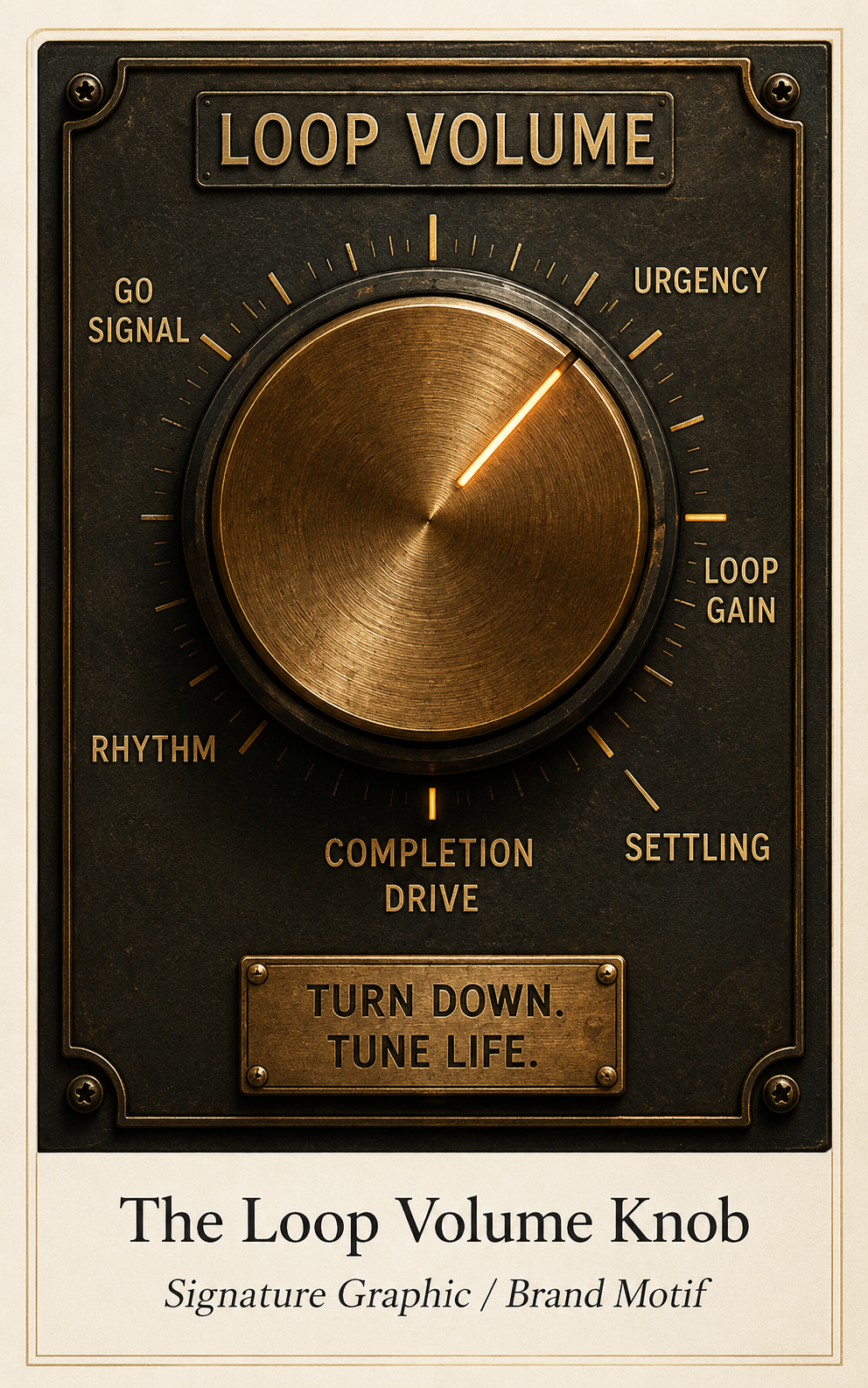
Why loops get louder, why balance matters, and how choice returns when the signal quiets.
Science breadcrumb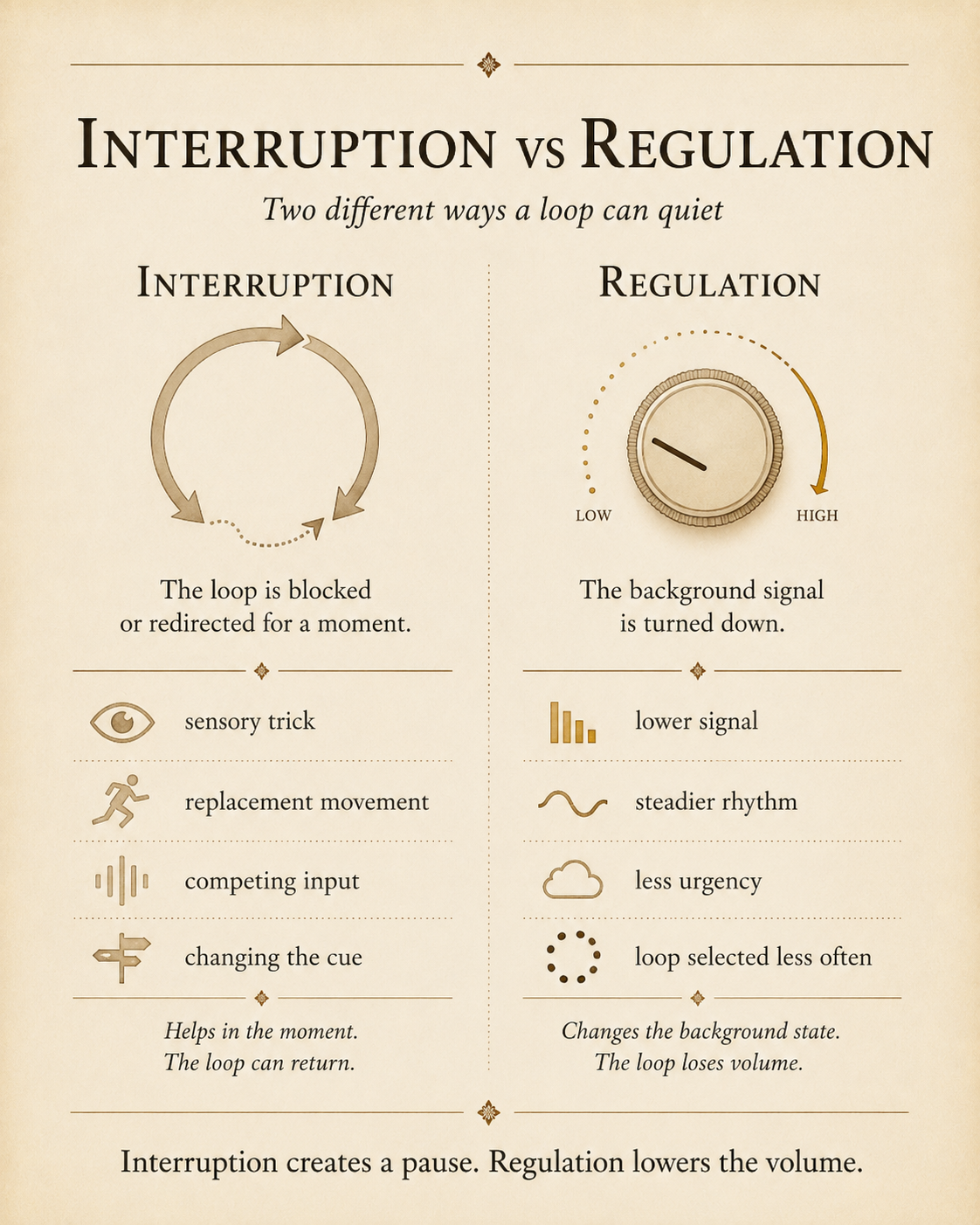
Sensory tricks, geste antagoniste, and small experiments that may interrupt a loop briefly.
Practical breadcrumb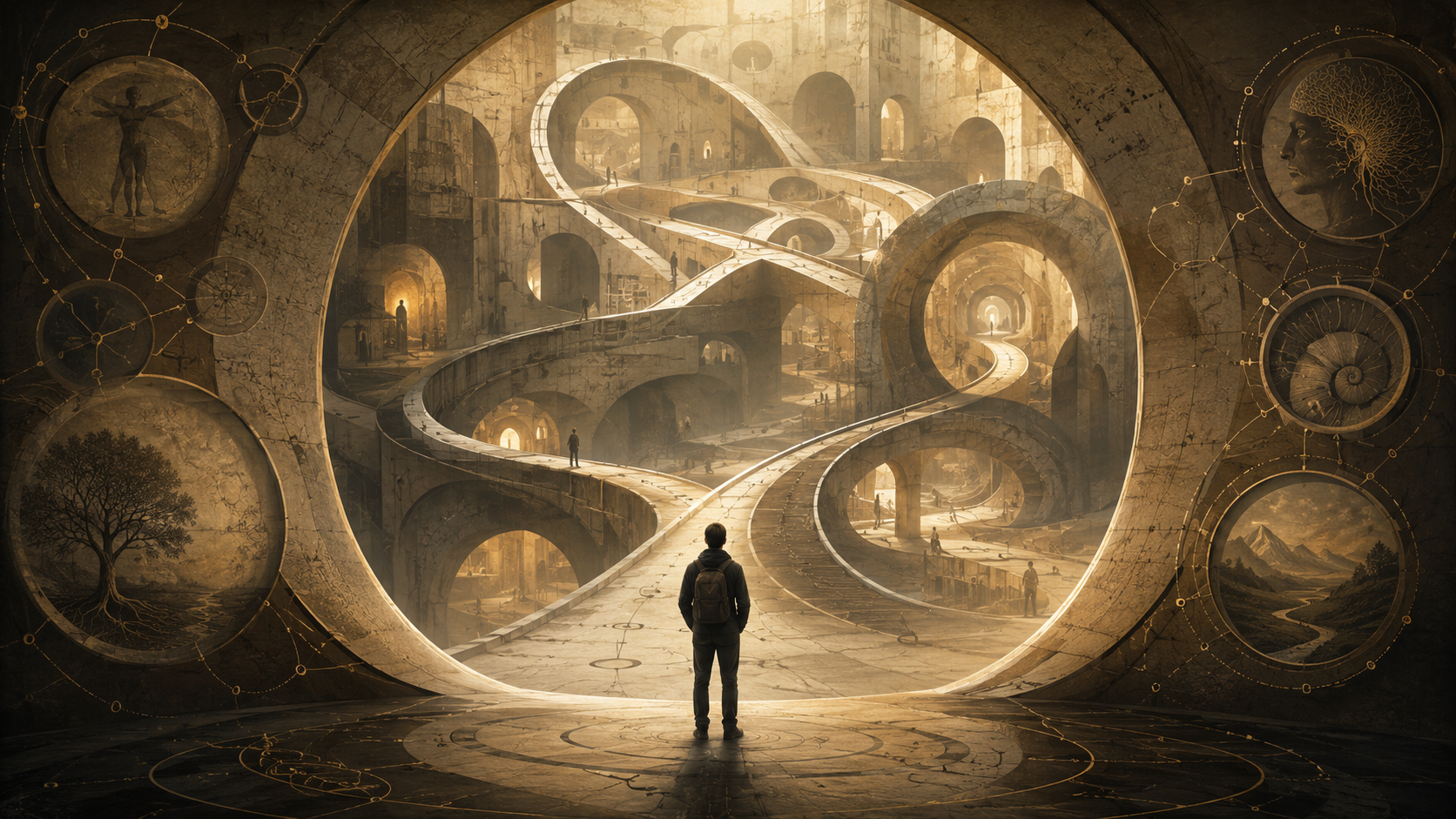
The manuscript remains the blueprint that built the museum.
Go deeperVisitors do not have to begin with a diagnosis. They can choose the doorway that feels familiar, then move toward the specific habit, chapter, or mechanism underneath.
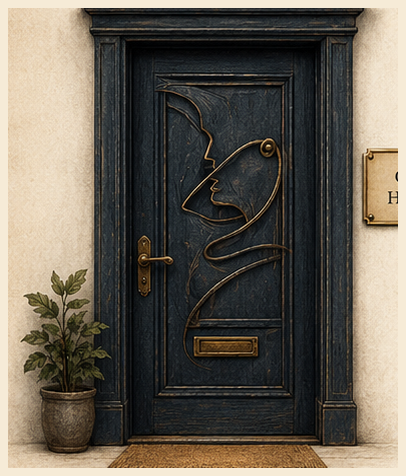
Loops that live around the mouth—chewing, biting, grinding, or other hard-to-explain oral patterns.
Enter the room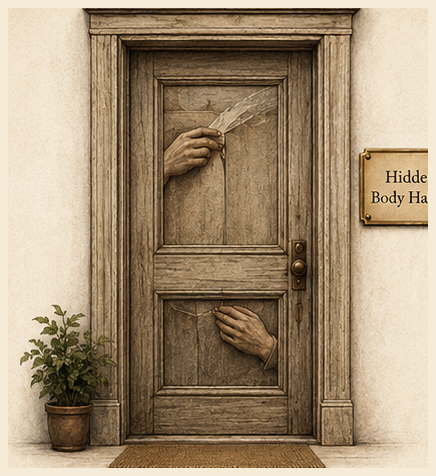
Repetitive habits directed at the body, often automatic, soothing, or hard to stop once they begin.
Step through
Eating patterns that feel less like hunger and more like a return, a pull, or a ritual.
Step through
The pull back toward relief, stimulation, risk, reward, or one more return.
Step through
Thoughts that circle back, replay themselves, or stay active long after they stop being useful.
Step through
Stories the mind repeats until they start to feel like fact.
Step through
The repeat-pull of screens, updates, novelty, and the urge to check one more time.
Step throughPatterns that begin as coping, soothing, or settling—and slowly become part of the rhythm.
Coming soon
The need to verify, adjust, repeat, or make something feel complete before moving on.
Step through
Holding on to things, possibilities, or decisions because letting go feels harder than keeping.
Step throughLoops that live around the mouth—chewing, biting, grinding, or other hard-to-explain oral patterns.
Repetitive habits directed at the body, often automatic, soothing, or hard to stop once they begin.
Eating patterns that feel less like hunger and more like a return, a pull, or a ritual.
The pull back toward relief, stimulation, risk, reward, or one more return.
Thoughts that circle back, replay themselves, or stay active long after they stop being useful.
Stories the mind repeats until they start to feel like fact.
The repeat-pull of screens, updates, novelty, and the urge to check one more time.
Mechanism room coming soon.
The need to verify, adjust, repeat, or make something feel complete before moving on.
Holding on to things, possibilities, or decisions because letting go feels harder than keeping.
The manuscript is the backbone of this world. Each part becomes a region of the map, and each chapter can later become its own room, path, or doorway back into the Loop Hypothesis.
V46 note: The Loop Engine now includes meaning loops — beliefs, money, religion, politics, identity, and certainty — without treating them as symptoms.

Ordinary repetition, familiar rooms, family patterns, and the loops that hum beneath awareness.

Oral habits, hidden body habits, sensory tricks, and movements that often start before awareness.
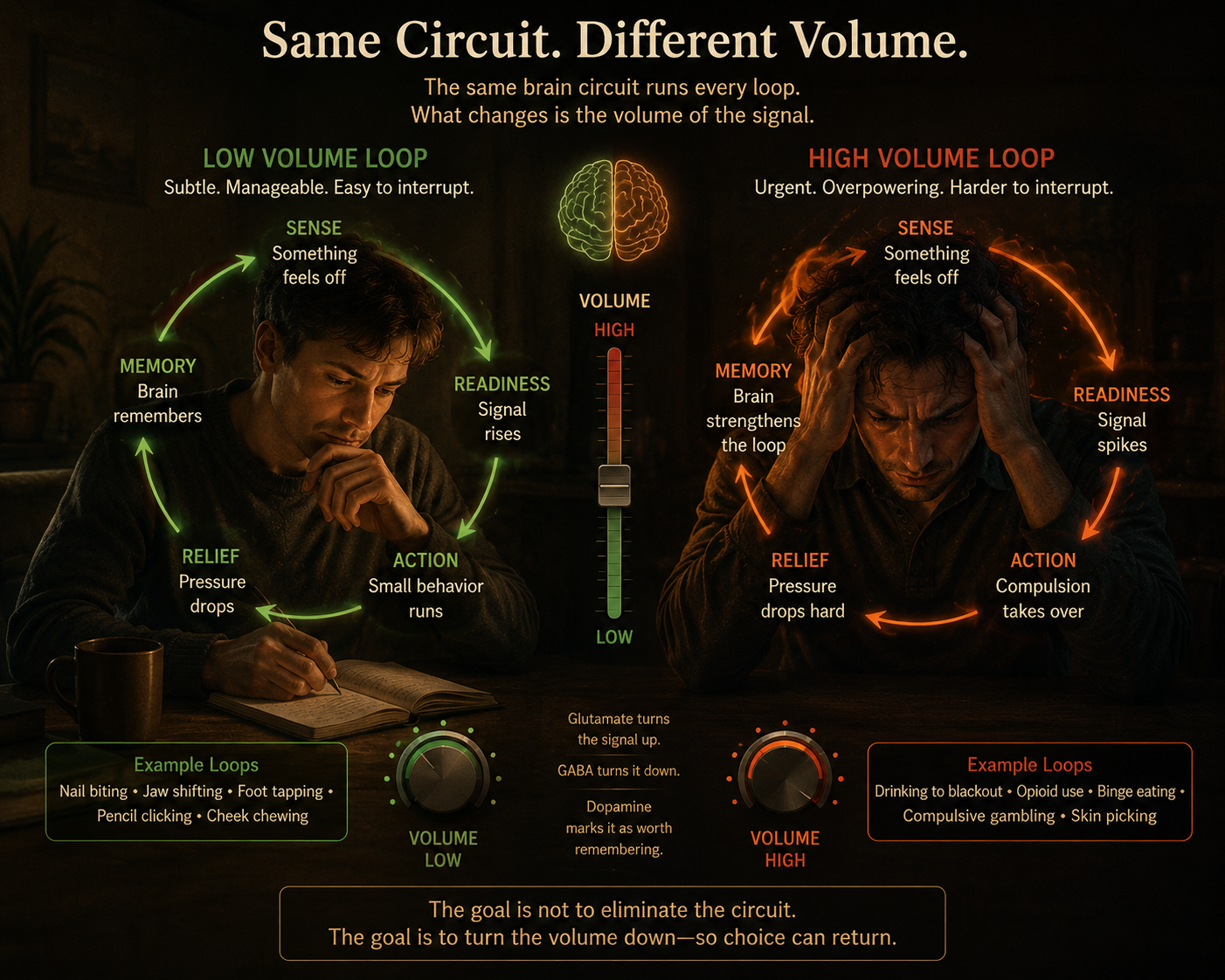
Readiness, action, completion, reinforcement, plasticity, and the brain’s go / settle signals.

Smoking, drinking, appetite, addiction, consequence, and the moment the same action means something different.
Enter Part IV
Rumination, certainty, hoarding, medical loops, and repeating systems that scale beyond the body.
Some visitors enter through a behavior. Others enter through the mechanism. These science portals are larger doorways into how loops form, why they get louder, what keeps them running, and what may help turn the signal down.
The basic pattern behind repeated behavior: signal, action, relief, and reset.
Enter the engineRelief teaches repetition. What worked once can become faster, quieter, and more automatic.
See why loops repeatGlutamate helps the system go. GABA helps it settle. Dopamine marks what worked.
Enter the chemistryWhat turns the signal up — and what may help turn it down?
Enter the control room
You probably recognized something here.
A loop that sounds familiar. A family it belongs to. A feeling you’ve had but never had language for.
That recognition is the beginning.
The manuscript goes deeper — into the circuit underneath, the signals behind it, and what it may mean to turn the volume down, or sometimes feel the loop go quiet.
New chapters, diagrams, doorway pages, and discoveries land here first.
You can also write directly: hello@theloophypothesis.com
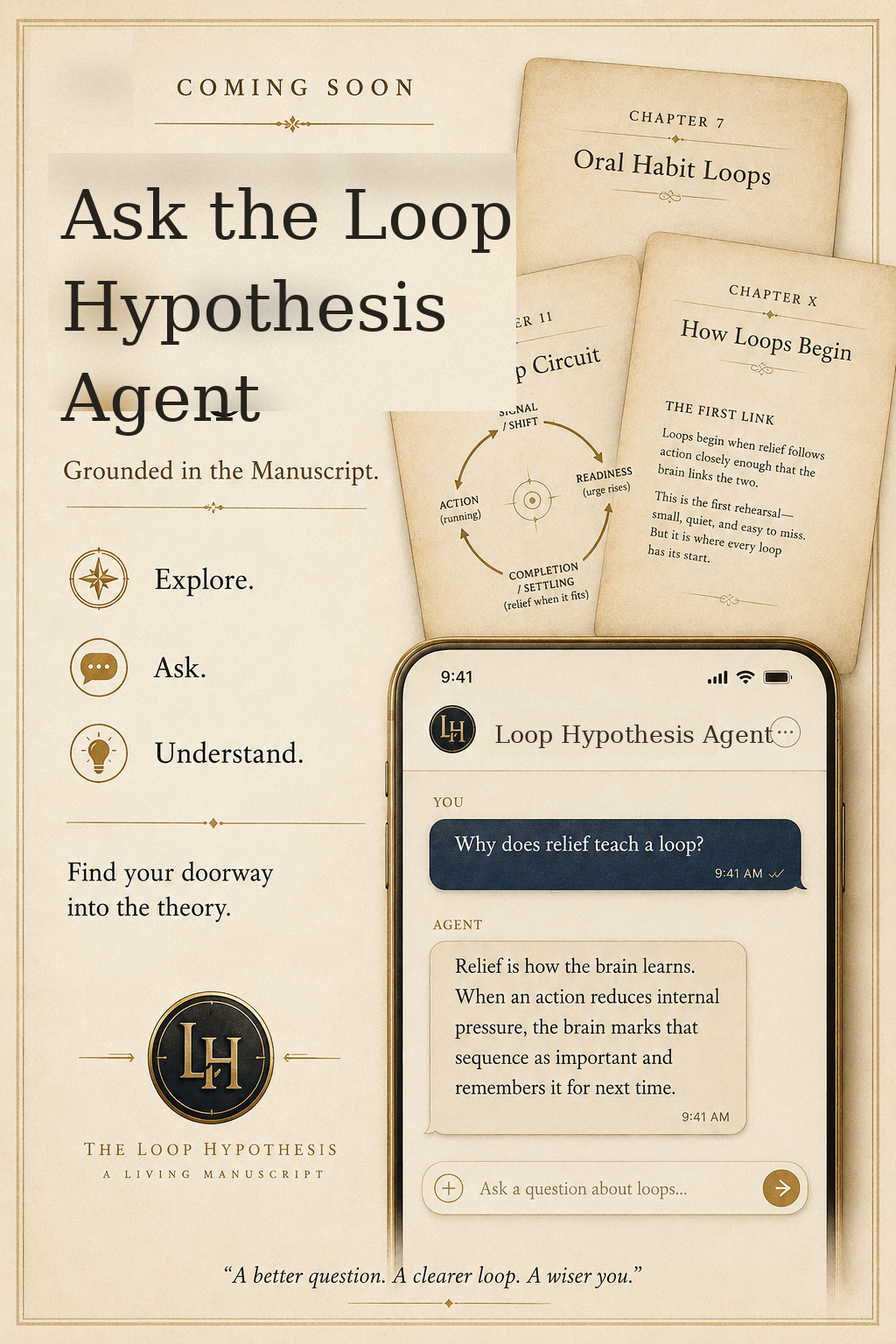
A guided companion grounded in the manuscript: by chapter, loop family, mechanism, or personal doorway.
Educational only. It will not diagnose, treat, or replace medical or mental health care.