Preview Site V57: Navigation + sensory language cleanup.
The manuscript map behind the Loop Hypothesis
Enter the manuscript

The book becomes the map.

You do not have to read this book in order. Start where the loop feels familiar. The manuscript is organized here by pathways, not final chapter numbers.

The doors show where visitors enter. The manuscript map shows how those rooms connect.

Before you enter

What this is — and what this is not.

The Loop Hypothesis should feel like a hand on the shoulder, not a label on the forehead. This orientation gives visitors a calm place to land before they choose a doorway or pathway.

What this is

  • A map for recognizing repeating patterns in the body, mind, and nervous system.
  • A de-shaming framework for behaviors that often feel private, strange, or hard to explain.
  • A manuscript companion: pathways into the book before final chapter numbers are locked.
  • A place to understand mechanisms — sensation, relief, timing, chemistry, environment, and learning.

What this is not

  • Not a diagnosis and not a substitute for medical or mental health care.
  • Not a promise that every loop has the same cause or the same solution.
  • Not a product pitch or a promise of one answer. Chemistry appears later as one possible layer of the map, not the whole story.
  • Not a demand to stop. The first step is seeing the loop clearly.

If you arrived here desperate

This site begins with recognition because panic makes loops louder. You do not have to solve everything before you understand anything. Start with the moment that feels familiar. Let the map widen slowly.

The goal is not to diagnose yourself. The goal is to feel less alone, less ashamed, and more able to ask: what is this loop trying to complete?

How to use this map

Start where it hurts. The rest will connect.

A visitor may arrive through an oral habit, nail biting, smoking, a second drink, a thought that will not let go, or a room that remembers too much. The book does not need to meet them with a chapter number. It can meet them with a pathway.

The loops we all live with

Recognition

First the reader sees the pattern in ordinary life.

The hidden hands and body loops

Mechanism

Then the behavior becomes a nervous-system sequence, not a character flaw.

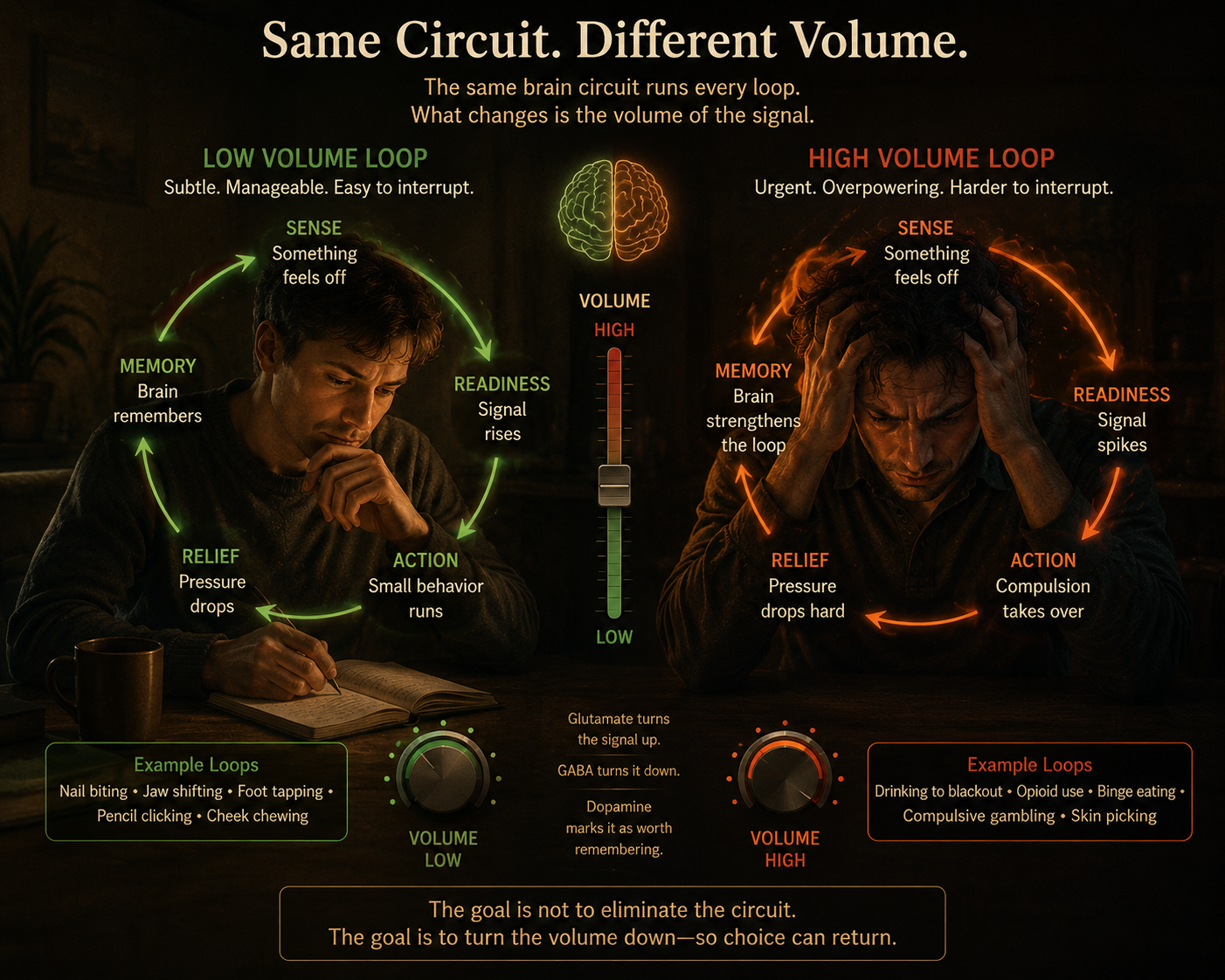
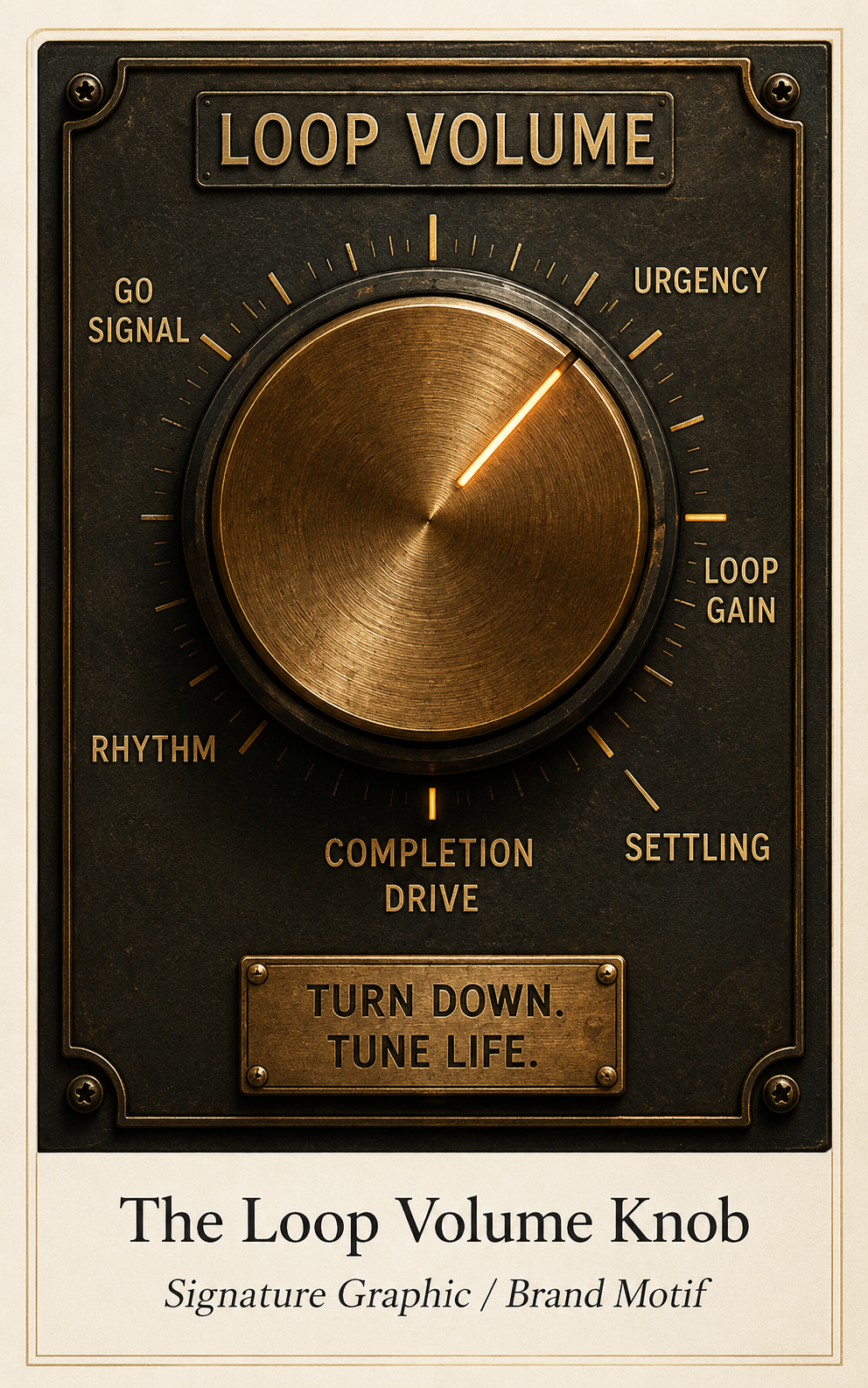
The volume knob of the loop

Leverage

Finally the question changes: what turns the signal up, and what may turn it down?

The next level in

The Loop Engine

Before the map branches into specific loop families, the Loop Engine shows the shared mechanism underneath them: signal, readiness, action, relief, memory, and return.

Choose your pathway

Navigate by loop family, not final chapter order.

Chapter numbers can change. Titles can move. But the pathways are already clear.

1

The Origin Mystery

Start here if you want the personal beginning without being pushed into the full disclosure too soon: a private orphan habit, decades of searching, invention, and the unexpected moment the loop went quiet.

Connects to the Preface, source notes, sensory devices, NeuroBand, and the first season of quiet.

Next level in
2

The Loops We All Live With

Start here if you want the broadest public doorway: buffet lines, family loops, repeated phrases, foot tapping, jaw tightening, and everyday regulation.

Connects to The Buffet, Everyone Has Loops, and The Loop Circuit.

See the pattern everywhere
3

Oral Loops

Start here if the loop lives behind closed lips: tongue movement, cheek biting, grinding, clenching, humming, or mouth movement that starts before awareness.

Connects to Oral Habit Loops, BFRBs, sensory tricks, and the chemistry of background pressure.

Enter through the mouth
4

Edge Loops

Start here if the problem begins as roughness, mismatch, a snag, a scab, a nail edge, or a tiny not-right signal.

Connects to Nail Biting, Edge Loops, skin picking, cuticles, tooth edges, and completion.

Follow the edge
5

Relief Loops

Start here if the behavior feels less like pleasure and more like the moment something finally settles.

Connects to The First Cigarette, The Second Drink, addiction loops, risk, return, and consequence.

When relief becomes reward
6

Thought Loops

Start here if the loop is mostly mental: worry, rumination, grief, grievance, suspicion, or a thought that keeps circling.

Connects to When Thoughts Won’t Let Go, co-rumination, and invisible loops that run strongest when unnamed.

Enter the loop of thought
7

Belief Loops

Start here if certainty itself has become the loop: identity, politics, sacred frames, algorithms, and stories that feel like reality.

Connects to When Belief Becomes a Loop and the larger question of regulation at scale.

When certainty becomes circuitry
8

Sensory Tricks (Geste Antagoniste)

Start here if a small signal changes the loop: touch, pressure, posture, texture, temperature, rhythm, breath, or a shift in body position.

Connects to sensory gating, loop interruption, and the difference between a temporary signal change and deeper regulation.

Signals that change us
9

Circuit Volume

Start here if you want the fifth-grade neuroscience: the brain’s go signal, settle signal, save-this signal, circuit volume, and why rhythm may matter more than force.

Connects to the glutamate chapter, mechanism chapters, timing sidebars, and the loop volume knob.

Turn down the signal
10

Plasticity and Change

Start here if you want hope without hype: how loops begin, how they harden, and how the brain can still learn.

Connects to How Loops Begin, The Critical Window, Plasticity, and The Miracle of the Glove.

The brain can still learn
11

Rooms, Systems, and Environments

Start here if the loop has moved outside the body: cluttered rooms, medical reassurance, digital spaces, repeated settings, or environments that keep the sequence alive.

Connects to Rooms That Remember, The Medical Loop, hoarding, saving, attention loops, and the ways systems can repeat with us.

When loops become rooms
The reader’s route

Recognition before instruction.

The public site should not coach too early. It should help the reader feel seen first. Once the loop is recognized, the mechanism can come forward.

1. Recognize the loop

A behavior, thought, room, or ritual suddenly feels familiar.

2. Follow the pathway

The pattern becomes a system: cue, readiness, action, relief, reset.

3. See the mechanism

Shame drops. Mystery lowers. The loop becomes workable.

Not a final table of contents

This map protects the manuscript while it grows.

This is not the final chapter order. Chapter numbers may change. Titles may move. Some chapters may split or merge. But the pathways are stable because they follow how people arrive: through a behavior, a feeling, a question, or a moment of recognition.

What Turns the Volume Down

The answer-path page: understanding, sensory input, environment, timing, chemistry, and the quiet point.

Go, Settle, Save This

The neurochemistry doorway: glutamate helps the system go, GABA helps it settle, and dopamine marks what worked.