Later
The urge comes later.
Loops do not always quiet because we push harder.
Sometimes they quiet because the nervous system receives a different signal.
The question is no longer only, “Why does this keep happening?”
The next question is: “What is the loop listening for?”
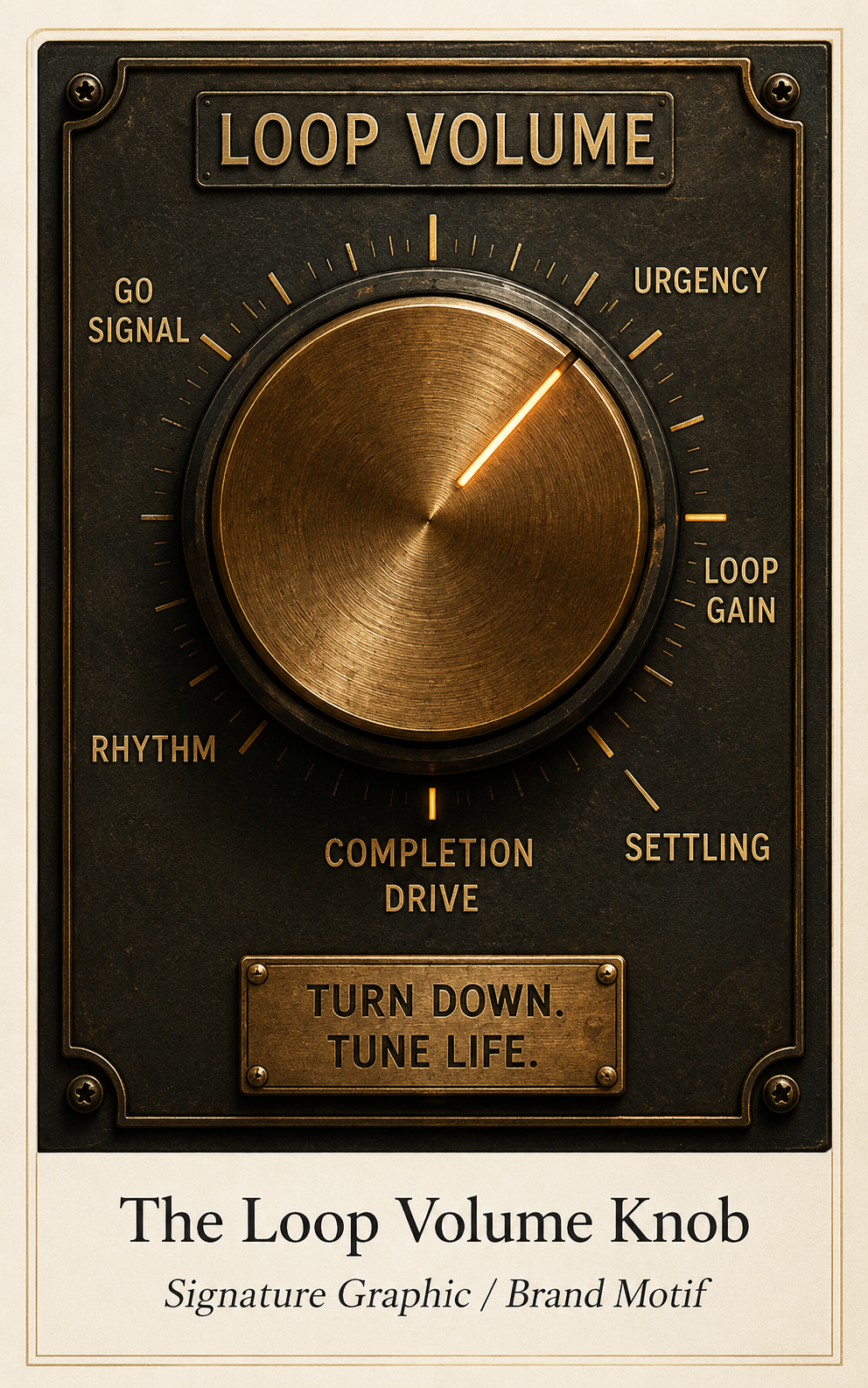
A loop may quiet because its meaning changes, because a competing sensation takes priority, because the environment changes, because state and timing shift, or because chemistry changes the background gain. These are equal parts of the map—not equal answers for every person.

Changes what the signal means and what the nervous system predicts will happen next.
Enter this path →
Changes what the nervous system notices, prioritizes, or organizes around in the moment.
Enter this path →
Changes cues, friction, availability, uncertainty, and the stopping signals surrounding a loop.
Enter this path →
Changes when a loop is easiest to launch: transitions, fatigue, focus, privacy, posture, and time of day.
Enter this path →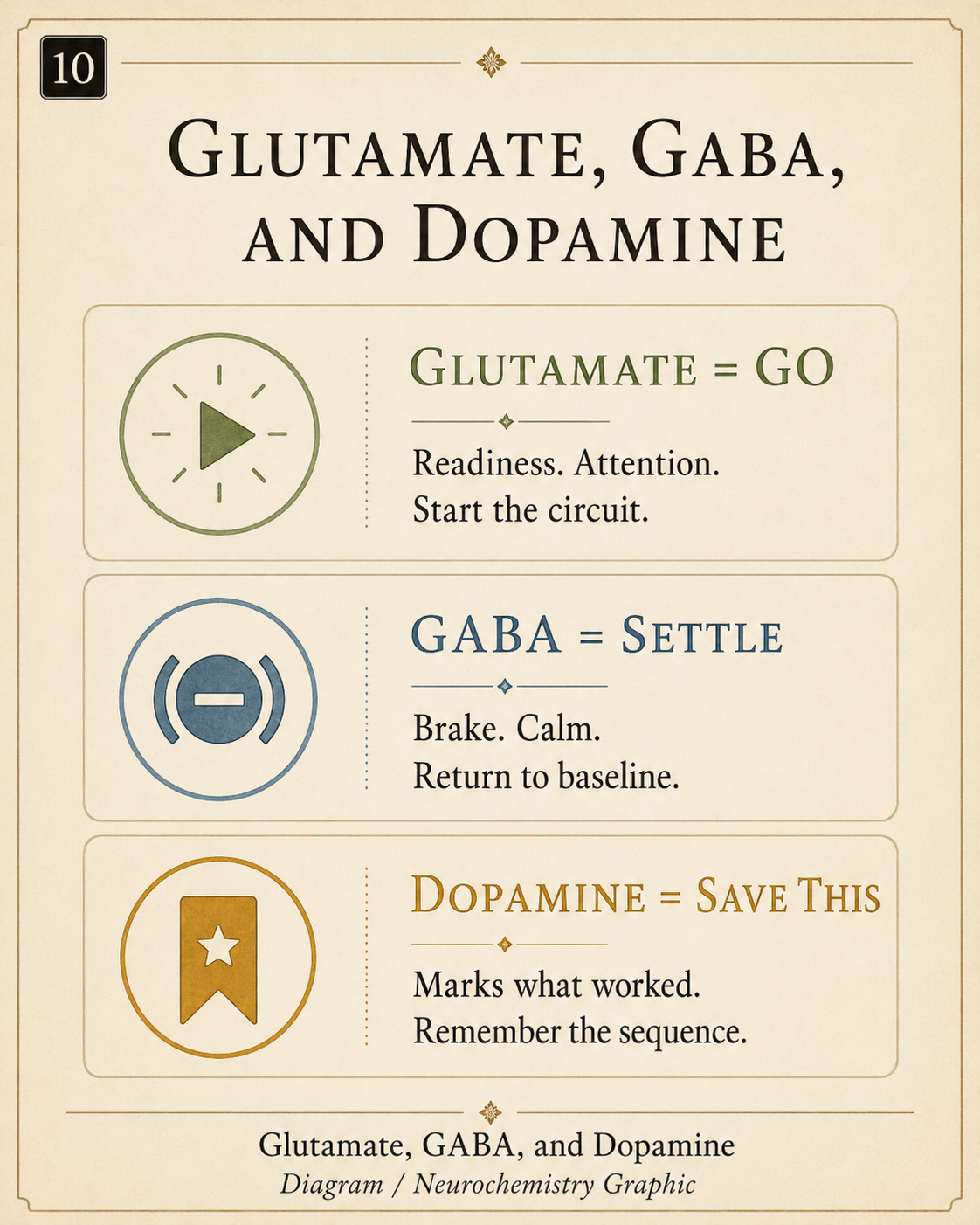
Changes circuit gain—the background pressure that can make a familiar loop whisper or insist.
Enter this path →He swung his legs out of bed and did not reach for the gum on the nightstand.
No battle. No effort. No heroic act of control.
For most people, that would mean nothing. For him, it felt almost impossible to believe. The day usually began with motion already underway — mouth busy before thought, the old private motor running before the room had fully come into focus.
That morning, the motor was not running.
The strange part was not relief.
The strange part was normal.
Mechanism: Sometimes the most important change is not stronger control. It is the absence of internal insistence.
It is tempting to think in one direction: more effort, more control, more intervention.
But loops do not always quiet that way.
Sometimes too little support leaves the system humming. Too much intervention may push the system away from balance. The goal is not maximum force.
The goal is the quiet point.
Think of an old radio on a workbench. Turn the dial too far one way and the station dissolves into static. Turn it too far the other way and the signal breaks apart again. Somewhere in the middle, the sound clears.
Not more. Not less. Tuned.
N-acetylcysteine (NAC) is one example of a chemistry lever that may lower background loop pressure for some people, making a behavior less automatic and easier not to select.
That does not make it a cure. It does not teach skills. It does not work for everyone. And more is not always better.
What matters is not force alone, but fit: the right lever, at the right level, at the right time.
The urge comes later.
The signal has less authority.
The loop is easier to notice without obeying.
The goal is not perfection. The goal is less capture.
The volume knob is the central idea. The five inputs above are the deeper routes into what may be moving it. Follow one path, compare several, or continue to the practical gallery after you understand the mechanism.
Continue forward through the mechanism, or step back without losing your place.