Hoarding & Saving Loops
A cluttered room for saving, keeping, postponing, acquiring, and the difficulty of letting go.
Hoarding is not simply too much stuff. It is often a house-sized loop where keeping relieves the discomfort of discarding and the room slowly starts carrying the loop.
The Catalog on the Table
The catalog is months old. The sale is over. Nothing inside is urgent. To someone else, the decision is simple: throw it away.
But the hand pauses.
What if there is something useful in there? What if I need it later? What if throwing it away is a mistake?
Keeping it feels safer. The pressure drops. The catalog moves to a pile.
One small yes does not fill a house. Thousands of small yeses can.
Mechanism: A saving loop forms when keeping brings relief and discarding keeps the alarm alive.
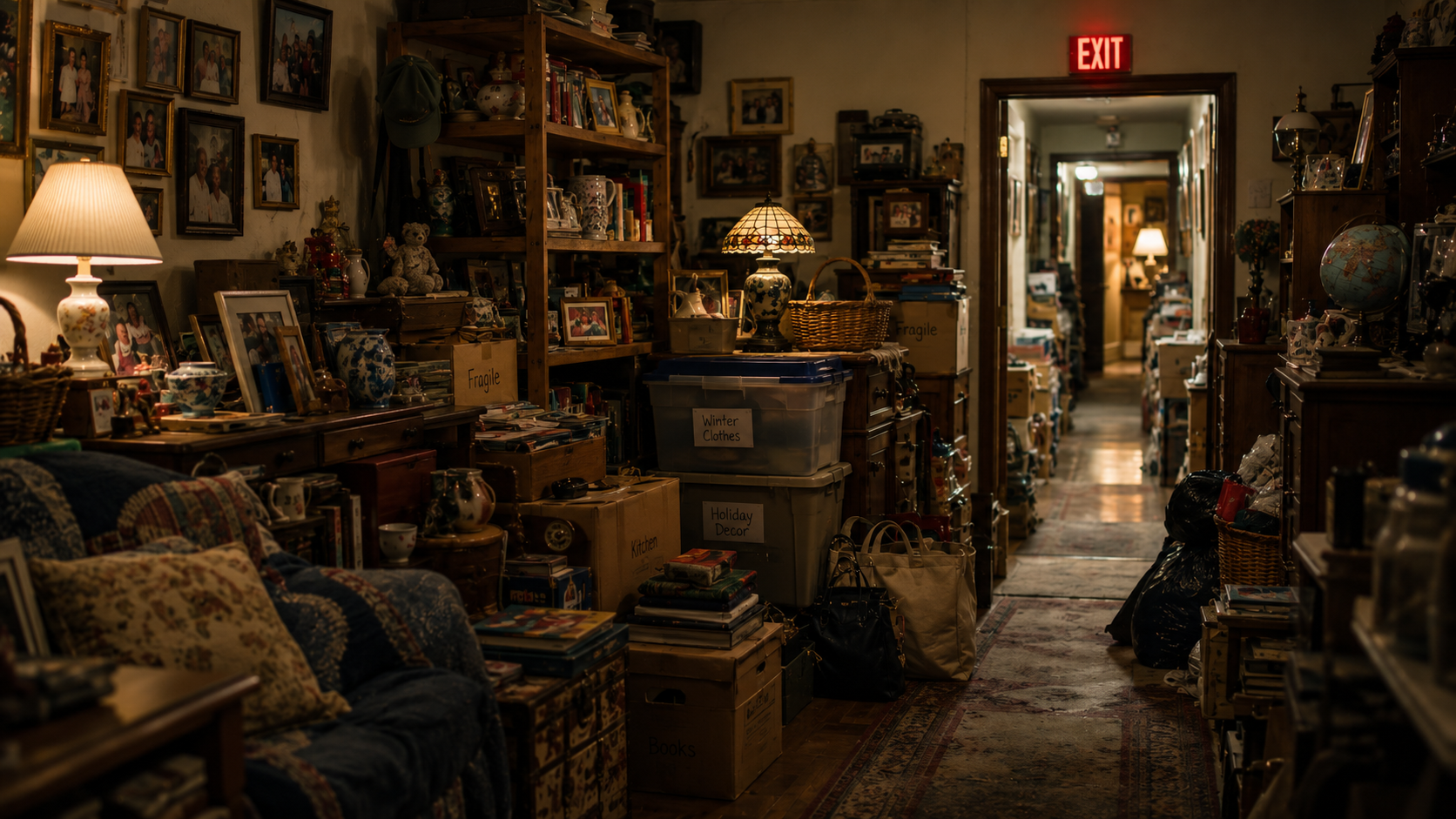
Start with the exhibit that is open.
This room will keep growing.
These are guideposts, not locked promises. As the museum expands, each will open only when it has a complete exhibit of its own.
Rooms That Remember
This doorway connects to the manuscript pathway on hoarding, saving, non-discard, avoidance, rooms that remember, and loops that become physical spaces.
Ready to look beneath the behavior? Begin with the shared circuit, then follow the five-part mechanism path without losing your place.