Five inputs · Cues & surroundings
Environment & Context
A loop does not run in empty space. Rooms, objects, availability, friction, novelty, and stopping cues can all change what the nervous system is likely to do next.
A loop does not run in empty space. Rooms, objects, availability, friction, novelty, and stopping cues can all change what the nervous system is likely to do next.
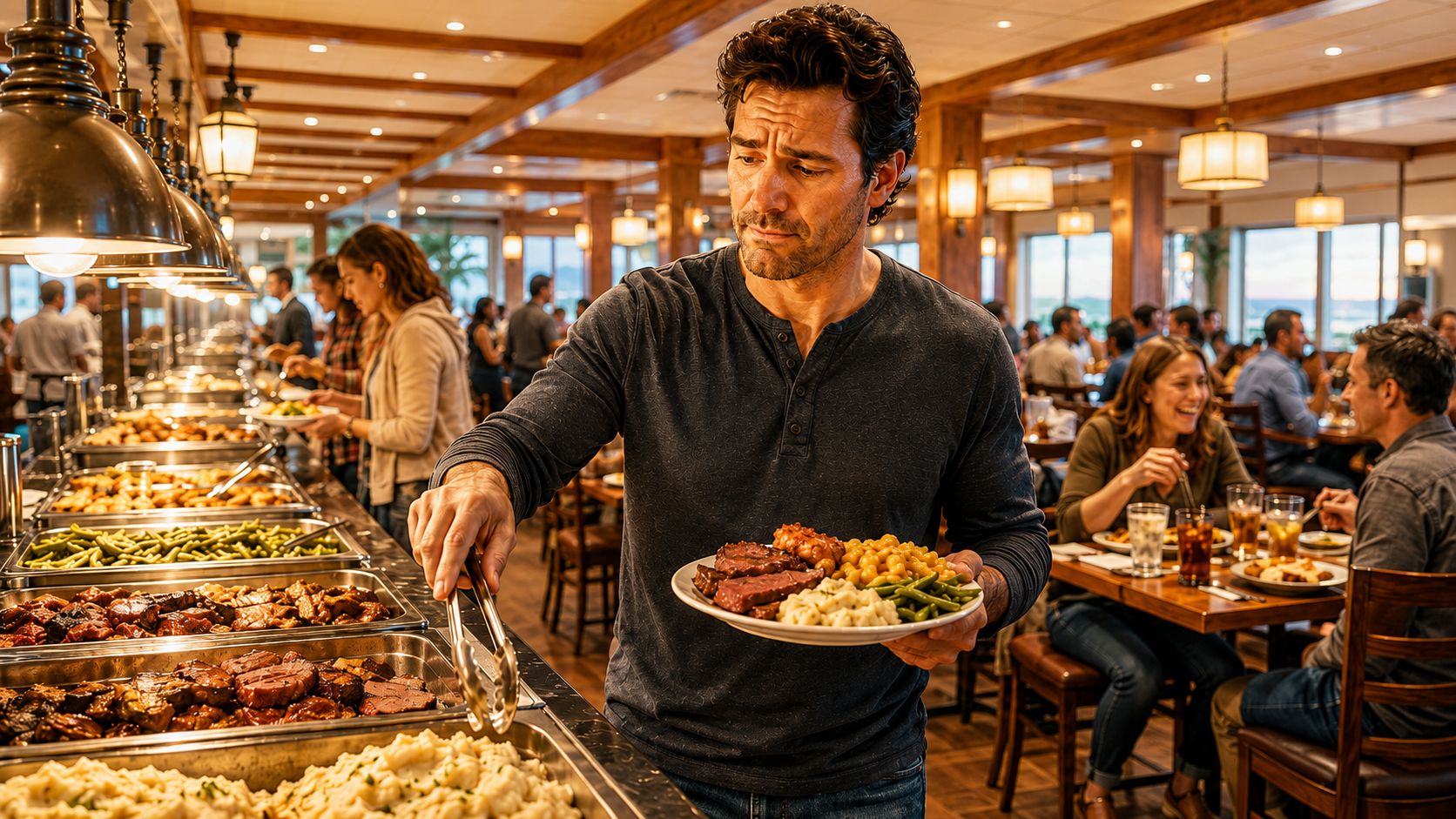
The same person can behave differently in different rooms. A buffet keeps cues visible and endings ambiguous. A phone removes friction from repetition. A familiar chair, car, desk, or doorway can become part of a learned sequence before conscious choice arrives.
Context is not background scenery. Once the brain learns a setting, the setting becomes part of the signal. Change the context and the loop may change with it.
Equal weight in the map does not mean equal evidence, equal power, or equal relevance for every person. Different loops may respond to different combinations of inputs, at different volumes, at different times.
After the mechanism comes the practical gallery: Tools & Experiments and Try This. That area will continue to grow as the project adds new examples and demonstrations.