Five inputs · Circuit gain
Chemistry
Chemistry changes the conditions under which a loop runs. It can alter readiness, settling, prediction, and the background gain that makes a familiar signal feel optional—or insistent.
Chemistry changes the conditions under which a loop runs. It can alter readiness, settling, prediction, and the background gain that makes a familiar signal feel optional—or insistent.
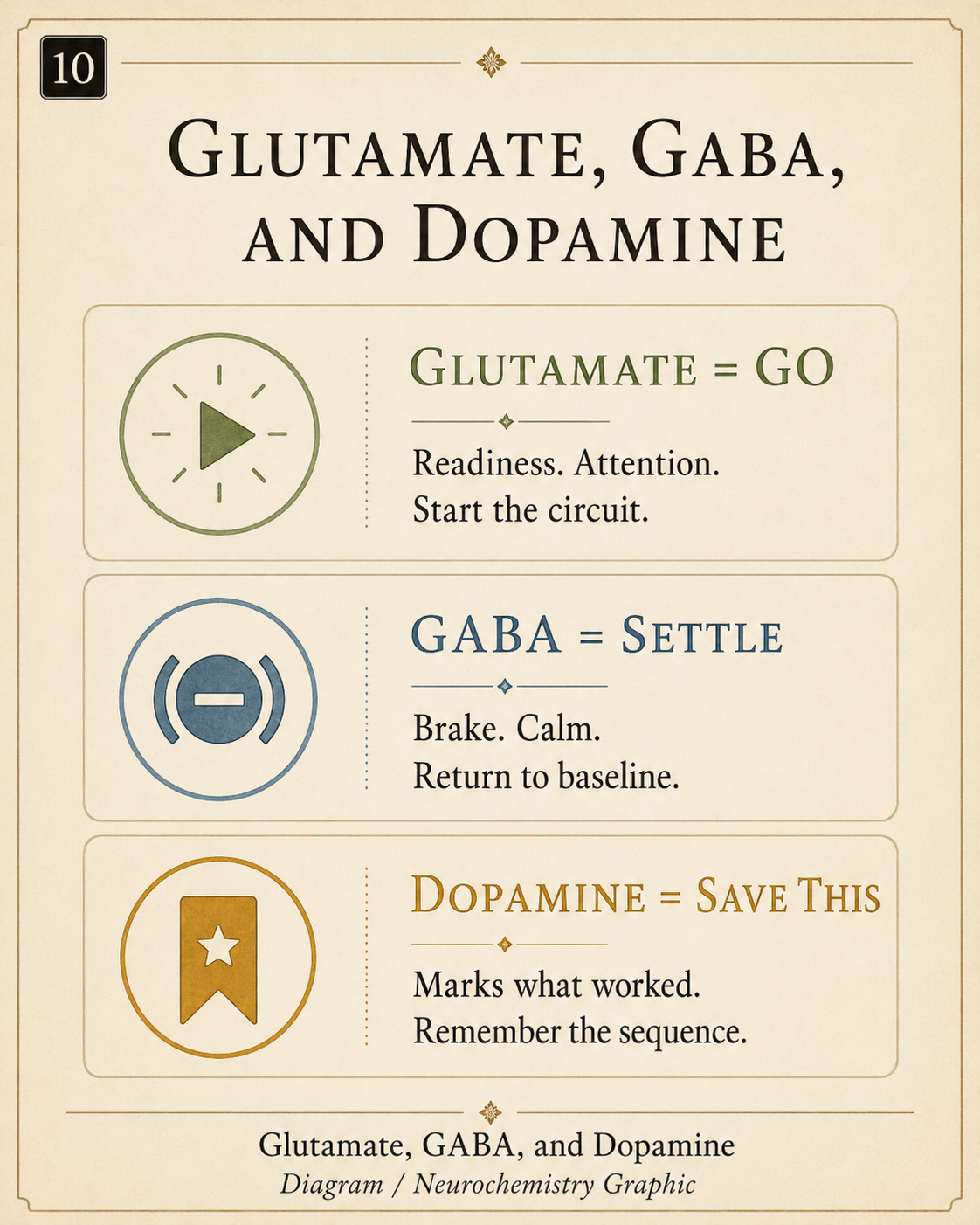
Glutamate, GABA, dopamine, sleep state, substances, medications, and other biochemical conditions can influence how strongly a circuit activates and how easily it settles. Chemistry does not explain every loop, but it belongs on the same map as meaning, sensation, environment, and timing.
N-acetylcysteine (NAC) belongs here as one possible chemistry lever—not as the chemistry story and not as a cure. Its importance in The Loop Hypothesis is that it makes circuit modulation concrete: for some people, changing background gain can change the felt authority of a loop.
Equal weight in the map does not mean equal evidence, equal power, or equal relevance for every person. Different loops may respond to different combinations of inputs, at different volumes, at different times.
After the mechanism comes the practical gallery: Tools & Experiments and Try This. That area will continue to grow as the project adds new examples and demonstrations.